
Kurdish political prisoners denied medical care in Orumiyeh
Source: Kurdistan Human Rights Network — https://kurdistanhumanrights.org/en/news/2026/10/01/kurdish-political-prisoners-denied-medical-care-in-orumiyeh

Prison authorities are denying two Kurdish political prisoners, Hossein Osmani and Bahram Majidi-Far, access to adequate medical care at Orumiyeh Central Prison despite serious health problems.
The two men are held in the prison’s Ershad ward, which houses political prisoners and prisoners of conscience.
The Kurdistan Human Rights Network (KHRN) has learned that Osmani, 65, from Mahabad, West Azerbaijan Province, is suffering from serious vision problems caused by a cataract in his left eye, and that prison officials have refused to transfer him to a medical facility outside the prison.
Osmani is serving the 13th year of a 30-year prison sentence.
Majidi-Far, from Orumiyeh, West Azerbaijan Province, has experienced severely low blood pressure in recent months.
Doctors at the prison infirmary have recommended that he be transferred to a medical facility outside the prison for examination by a cardiologist, but prison authorities have refused to approve the transfer.
Hossein Osmani’s case
Osmani was arrested on 23 February 2014 after being summoned to the Ministry of Intelligence’s office in Mahabad and was taken to the ministry’s detention facility in Orumiyeh.
He spent 13 months in solitary confinement, during which he was denied family visits and allowed only two brief telephone calls with his family.
He was subjected to severe physical and psychological torture at the detention facility, and in 2014, he spent four months in Orumiyeh’s Khomeini Hospital receiving treatment for injuries caused by torture.
In March 2015, Branch One of the Islamic Revolutionary Court in Mahabad, presided over by Judge Javadikia, sentenced Osmani and two other political prisoners, Diako Rasoulzadeh and Saber Sheikh-Abdollah, to public execution.
The three men, who were denied access to a lawyer, faced charges of “enmity against God” (moharebeh) through membership of the Komala Party of Iranian Kurdistan and “participation in the 2010 Mahabad bombing”.
Following their appeals, the Supreme Court quashed the sentences and returned the case to the same court for retrial.
In 2018, the court, then presided over by Judge Javad Gholami, sentenced Osmani to 30 years’ imprisonment and internal exile to Orumiyeh Prison. The Supreme Court upheld the sentence.
The charges against Osmani were based on confessions that he said had been extracted through torture and coercion. During court hearings, he rejected the confessions recorded in his case file and said they had been obtained under torture, but his statements and defence were not examined.
On 23 September 2019, he was transferred to Orumiyeh Central Prison after spending 11 months in Mahabad Prison.
Rasoulzadeh and Sheikh-Abdollah were executed on 13 July 2020.
Government officials and the Islamic Revolutionary Guard Corps (IRGC) had made conflicting statements about those responsible for the 2010 Mahabad bombing.
On 18 May 2014, the Ministry of Intelligence announced that it had arrested three people as the “perpetrators of the bombing”. However, three years earlier, on 26 September 2010, the commander of the IRGC Ground Forces had announced that the “main and central figures” behind the bombing had been killed.
An informed source with close knowledge of the case previously told KHRN: “When these three Kurdish citizens were detained, Ministry of Intelligence interrogators first tortured them, then promised to help them and secure their release if they cooperated by accepting responsibility for the bombing. Otherwise, they would fabricate a case against them and have them sentenced to death.”
In September 2014, the Islamic Republic of Iran’s Press TV broadcast footage of the prisoners’ confessions, which the prisoners said had been obtained under pressure and torture.
Bahram Majidi-Far’s case
Majidi-Far, from the village of Razhan near Orumiyeh, was arrested by Ministry of Intelligence agents in July 2024.
After approximately two months of interrogation at the Ministry of Intelligence and IRGC Intelligence Organisation detention facilities in Orumiyeh, he was transferred to the city’s central prison.
Several months later, Branch One of the Islamic Revolutionary Court in Orumiyeh, presided over by Judge Najafzadeh, sentenced him to three years, four months and one day in prison, plus a suspended prison sentence of six years and eight months.
The sentence was imposed on charges of “propaganda against the state” and “membership of opposition groups” through membership of the Democratic Party of Iranian Kurdistan (PDKI).
Majidi-Far was released on bail after approximately 11 months in detention. Once his sentence became final, he was returned to Orumiyeh Central Prison to serve his prison term.
Related
-
 Kurdish political prisoner sews lips, begins hunger strike in Orumiyeh
-
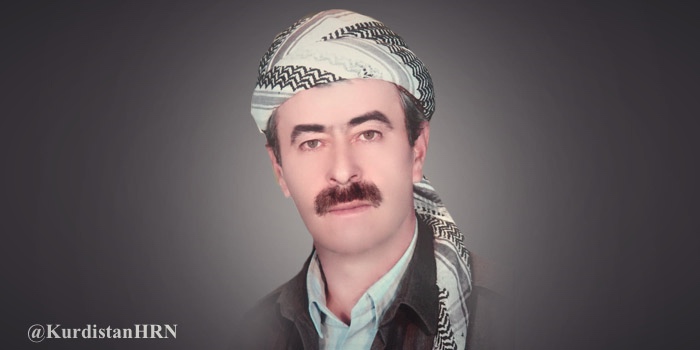 Hossein Osmani – Orumiyeh Central Prison
-
 Kurdish political prisoner released after completing sentence in Orumiyeh
-
 Kurdish political prisoner released from Orumiyeh prison after four years
-
 Two Kurdish political prisoners conditionally released from Orumiyeh Central Prison
-
 Kurdish political prisoner beaten, taken to psychiatric hospital in Orumiyeh