
Kurdish Political Prisoner Verisheh Moradi Sentenced to Death for Second Time
Source: Kurdistan Human Rights Network — https://kurdistanhumanrights.org/en/news/2026/10/14/kurdish-political-prisoner-verisheh-moradi-sentenced-to-death-for-second-time

Branch 15 of the Islamic Revolutionary Court in Tehran, presided over by Judge Abolghassem Salavati, has sentenced Verisheh Moradi, a Kurdish political prisoner, to death for the second time on charges of “membership in a group accused of armed rebellion against the State (baghy)”.
The Kurdistan Human Rights Network (KHRN) has learned that the latest hearing in Moradi’s case was held on 20 September 2026 before Branch 15 of the Islamic Revolutionary Court in Tehran, presided over by Judge Salavati. Moradi refused to attend the hearing, declaring that she did not recognise the legitimacy of the court.
On Wednesday, 14 October 2026, Amir Sajadi, one of Moradi’s lawyers, told Emtedad that the new death sentence had been formally notified to one of her lawyers earlier that day. According to Sajadi, the court had once again sentenced his client to death, and the ruling can be appealed to the Supreme Court within 20 days of notification.
Keyvan Azizi, another of Moradi’s lawyers, criticised the judicial proceedings, stating that Branch 15 of the Islamic Revolutionary Court had once again issued a death sentence without conducting the supplementary investigations requested by the Supreme Court.
According to Azizi, rather than addressing the fundamental flaws in the case, the court had merely changed the charge and repeated the previous death sentence, raising serious concerns about compliance with legal procedures and the defendant’s right to a defence.
Background
Moradi, a member of the East Kurdistan Free Women Society (KJAR) from Sanandaj, Kurdistan Province, was arrested by Ministry of Intelligence agents on 1 August 2023 at the entrance to Sanandaj while returning from Kermanshah, Kermanshah Province, where she had been involved in political and organisational activities.
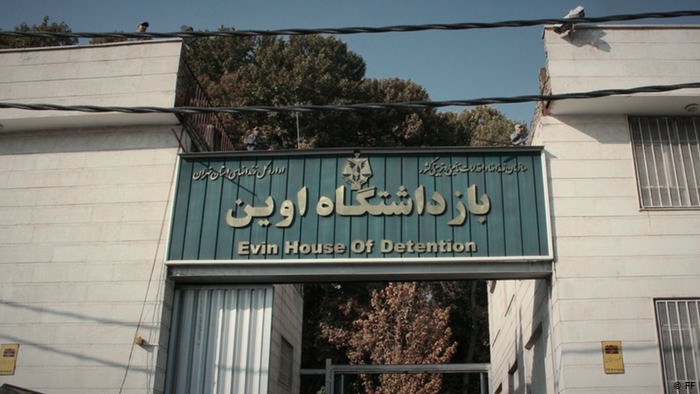
She spent the first 13 days of her detention at a Ministry of Intelligence detention facility in Sanandaj before being transferred to Ward 209 of Evin Prison in Tehran.
During her detention, she was subjected to pressure and threats aimed at extracting forced confessions. On 26 December 2023, after five months in solitary confinement, she was transferred to the women’s ward of Evin Prison.
On 10 October 2024, marking the World Day Against the Death Penalty, Moradi began a 20-day hunger strike in Tehran’s Evin Prison to protest the issuance and execution of death sentences by the Islamic Republic of Iran.
Following the hunger strike, she was hospitalised overnight at a medical facility outside the prison due to gastrointestinal complications before being returned to prison.
Hearings in Moradi’s case were held on 16 June and 5 October 2024 before Branch 15 of the Islamic Revolutionary Court in Tehran, presided over by Judge Abolghassem Salavati. Her death sentence was formally notified to her lawyers on 10 November 2024.
During the proceedings, Moradi was denied the right to an effective defence, and the judge barred her lawyers from presenting arguments before the court.
Her lawyers, who had previously been denied access to the case file, were only granted a few hours to review it after the second hearing.
The death sentence was imposed despite the initial indictment requesting the application of Article 288 of the Islamic Penal Code, which carries a maximum sentence of 15 years’ imprisonment. Judge Salavati instead sentenced Moradi to death under Article 287, departing from the legal provision cited in the original indictment.
In December 2025, Moradi’s lawyer, Mostafa Nili, announced that the Supreme Court had overturned her death sentence due to deficiencies in the investigation and failures to comply with legal procedures, including the failure to formally inform her of the charge that ultimately formed the basis of the death sentence. The case was subsequently referred back to Branch 15 of the Islamic Revolutionary Court in Tehran for retrial.
Separately, in October 2024, Moradi and several other women political prisoners held in Evin Prison’s women’s ward were sentenced to six months’ imprisonment by a branch of Criminal Court Two at the Qods Judicial Complex in Tehran, presided over by Judge Abolfazl Ameri, on charges of “disrupting prison order”.
Related
-
 Tehran prosecutor blocks urgent treatment for Kurdish political prisoner
-
 Iran sentences three protest detainees to death, whereabouts unknown
-
 Kurdish activist denied family contact in Tehran’s Evin Prison
-
 Tehran Prosecutor Opposes Transferring the Political Prisoner to Bojnourd Prison
-
 Verisheh Moradi’s second hearing held without defence in Tehran
-
 Tehran holds court hearings for two Kurdish political prisoners